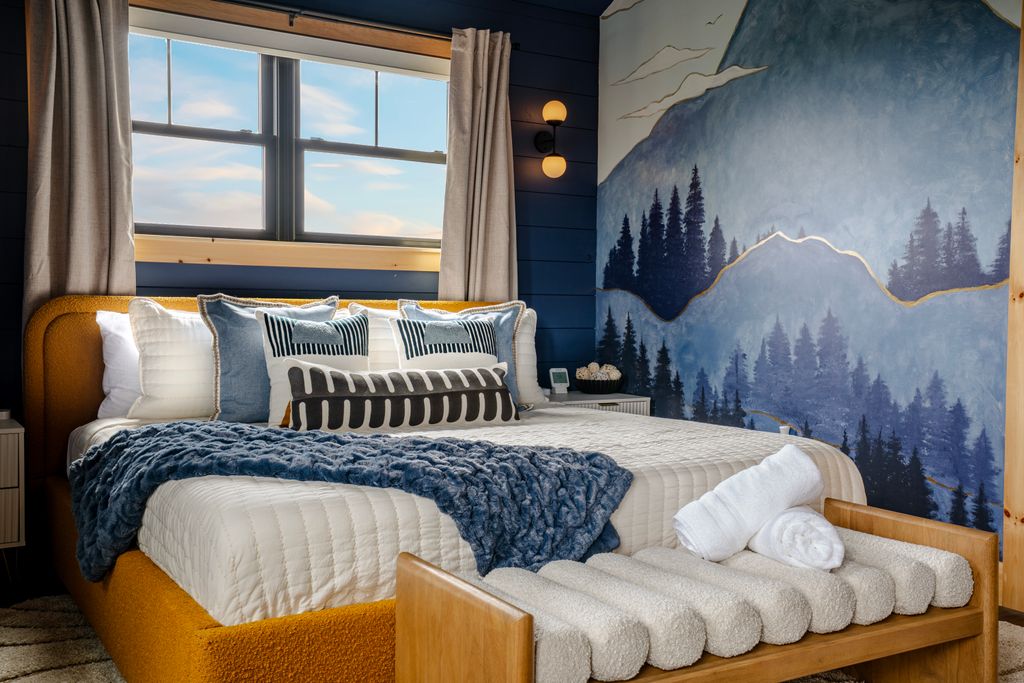
Group Wellness Retreat in Maine: Plan One That Works

A group wellness retreat is time set aside, together, to rest, move, eat well and reconnect. It doesn’t need a studio, a guru or a rigid schedule. It needs a good place, a loose rhythm and people who want to be there. Here is how to build one in the Maine mountains, for a family, a ski crew or a small wellness circle, and how a private retreat house in Bethel can be the setting.
Key takeaways
- A wellness retreat has no single formula. Research describes it as a residential experience for physical, psychological, spiritual or social well-being, so you get to shape it around your group.
- Choose a rhythm, not a rigid itinerary: one shared ritual a day, a few open hours, and everything optional.
- A private house suits mixed ages better than a program built for one type of guest, because the group sets the pace.
- Compare costs by what is included. Retreat pricing is quoted in very different ways.
- Altitude 22 sleeps up to 19 across six bedrooms in Bethel, near Sunday River, and you can book direct.
Table of Contents
- What is a group wellness retreat?
- Why a private house changes the retreat
- How a wellness retreat works for different groups
- Building your weekend: a sample rhythm
- Making it welcoming for everyone
- What does a group wellness retreat cost?
- Will insurance pay for a wellness retreat?
- Perspective: why we think the house matters
- Your retreat house in Bethel
- Planning tips for busy families
- Frequently asked questions
- Come gather with us
- Sources
What is a group wellness retreat?
It is a stay built around well-being, shared with other people. That is the plain answer, and the research backs up how loose the definition is. One observational study of wellness tourists describes retreats as immersive residential experiences that may include healthy meals, time in nature, educational programs, yoga, meditation, tai chi, treatments, rest, reflection and chances for guests to connect. It also notes there is no standard formula.
Some guides lean toward the structured end. A U.S. retreat guide from a nutrition company describes scheduled yoga, meditation, fitness, nutritious meals, workshops and group discussions, balanced with shared and individual downtime.
That range is good news for you. A retreat can be a guided week at a dedicated center. It can also be a long weekend in a mountain house where your own group decides what restoration looks like. We think of ours as the second kind: a gathering with room to breathe.
Why a private house changes the retreat
In a program-led retreat, the schedule belongs to someone else. In a private retreat house, it belongs to you. That matters most when your group is not uniform.
Picture a real one. Grandparents who want a slow morning and a good chair. A parent who needs an hour of movement before anyone talks to them. A 9-year-old who needs to burn off energy. A teenager who needs a corner and a screen. In a shared program, someone is always the odd one out. In a house that has room for all of it, nobody is.
That is the idea behind Altitude 22. We built it for connection, not just a place to sleep. Together has never been this fun, and it is also true that together works better when everyone has somewhere to land.
How a wellness retreat works for different groups
The plain answer: shape it around who is coming. The same house can host very different weekends.
Multigenerational families
The goal is something for every age, without anyone being herded. Build the day around two anchors, a shared meal and a shared evening ritual, and leave the hours between them open.
Mornings might mean a slow breakfast in the kitchen while early risers take a walk. Afternoons split naturally: some people hike, some soak, some nap. Evenings bring everyone back together, perhaps around a fire pit or in the home theater. The kids’ gaming suite gives the younger crowd their own space, which gives the adults theirs.

Ski families traveling with friends
Ski days are physical, and so is recovery. Think of the house as the second half of the trip. After a day on the mountain, you have a hot tub and a barrel sauna on the property, which is how a ski weekend becomes a wellness weekend. Dinner is a group effort in a modern kitchen, and then the game rooms and karaoke lounge take over.
The balance is simple: hard play outside, real rest inside.
Small wellness groups
If your circle practices yoga, meditation or breathwork, a private house lets you bring your own teacher or lead your own sessions. We don’t run a wellness program, so you set the schedule, the pace and the quiet hours. Come with a plan, or come with a loose idea and see what the weekend asks for.
Common retreat activities from a retreat-planning guide include yoga, mindfulness, breathwork, nature walks and journaling. Almost all of them need only floor space, a little quiet and good company.
Work teams and organizations
Teams often come back from a retreat saying the best moments were unplanned: the kitchen conversation, the walk, the late game. A house gives you that. Keep the agenda light, and treat wellness as an invitation rather than an assignment. More on that below.
Building your weekend: a sample rhythm
The plain answer: one ritual, one adventure, one shared meal, and open space around all three. Here is a rhythm you can borrow and bend.
| Time of day | Shared ritual | Optional |
|---|---|---|
| Morning | Slow breakfast together, a short stretch or quiet moment | Early walk, solo coffee on the deck, journaling |
| Midday | A group outing: a hike, a ski session, a drive to explore Bethel | Rest at the house, a swim, a nap |
| Late afternoon | Recovery: hot tub, sauna, quiet reading | Games, a film, kids’ gaming suite |
| Evening | Cook and eat together | Fire pit, karaoke, board games |
Planning ranges from a team retreat-activity guide can help you size things: group hikes tend to run 45 to 120 minutes, and guided meditation or breathwork 15 to 30 minutes. Short sessions are easier for a mixed group to say yes to.
Local color by season
Bethel changes character through the year, and so does the retreat.
- Winter: Ski days at Sunday River, then the hot tub and the sauna. Fire pits and a big kitchen make for long, warm evenings.
- Spring: A quieter season. Good for small wellness groups who want stillness and a slower pace.
- Summer: Swimming, deck time and walks on nearby trails. Our guide to scenic trails and waterfalls near Bethel is a good place to pick a hike.
- Fall: Foliage walks, crisp mornings, and fires after dark.
For the bigger picture of the region, see the most beautiful places in Maine.
Making it welcoming for everyone
The plain answer: tell people what is planned, make every piece optional, and ask about needs before you arrive.
The retreat guidance we found says much the same. Huel’s U.S. guide suggests choosing programs for all ages and experience levels, sharing health needs and dietary preferences ahead of time, and remembering that nobody has to do every activity. We like that last point best.
A few ways to put it into practice:
- Send a short note before the trip. Share the loose plan, the sleeping arrangements and a question about food preferences or mobility needs.
- Offer two versions of movement. A stretch session on the floor and one in a chair means no one watches from the sidelines.
- Protect solo time. An hour alone on the deck is part of the retreat, not a break from it.
- Let kids opt in. Ages 6 to 18 each want something different. Offer, don’t assign.
- Keep leaders light. If you are organizing for a team, invite rather than require. Pressure turns a restorative moment into a performance.
Belonging comes from being free to join in, not from being counted in.
What does a group wellness retreat cost?
The plain answer: it depends enormously on what you buy. The range is wide, and the quoting styles differ.
The Los Angeles Times reports retreats running from a little over $200 a night to more than $20,000 a week, and notes providers quote prices differently: a program fee plus room, per person for a set stay, or per program. The same article notes that at one well-known center, three meals, daily yoga classes and grounds access are included, while healing-arts services such as massage cost extra.
So when you compare, ask four things:
- Is lodging in the price, or separate?
- Are meals included?
- Are classes and treatments included, or sold on top?
- Is the price per person, per room or per group?
A private house works differently. You book one property for your whole group and plan the rest yourselves, so you choose what to spend on food, activities and guides. For a group of friends or a multigenerational family, splitting one stay can be a good deal of the value. For current rates and availability at Altitude 22, check our listing.
Will insurance pay for a wellness retreat?
In general, don’t plan on it. Wellness travel is a personal purchase, and your insurer decides what counts as a covered medical service. If a specific treatment is part of your plan, call your insurer before you book and ask in writing what is covered.
There is a reason to be careful with paperwork. The California Department of Insurance lists misrepresenting non-covered treatments as covered ones as a common form of healthcare fraud, and encourages people to compare their explanations of benefits with the services they actually received. Good habits for anyone, in any state. For questions about your own plan, your insurer or a benefits adviser is the right person to ask.
Perspective: why we think the house matters
We didn’t build Altitude 22 to be a program. We built it to be a place where a group can make its own.
Most wellness retreats ask you to fit into someone’s schedule. That works for some people. But when you bring three generations, or a ski crew, or a team that rarely sees each other, the most restorative thing is often just room: room to gather, room to wander off, room to come back.
So we focused on the spaces where connection happens by itself. A kitchen big enough to cook in together. A deck for slow mornings. Fire pits for the end of the day. A karaoke lounge, game rooms and a home theater for play, because laughing together is wellness too. A hot tub and a barrel sauna for the part where everyone finally exhales.

We also care about the small things. A group that arrives tired should feel welcome in the first five minutes. A stay should feel effortless to plan. That is the work we love, and it is why we host the way we do.
A retreat is a ritual you build with the people you love. We just keep the house ready.
— Yash
Your retreat house in Bethel
Altitude 22 is a six-bedroom, year-round mountain retreat in Bethel, Maine, near Sunday River. It sleeps up to 19 with 5.5 bathrooms, so a big family or a full ski group can stay under one roof.
The listing includes a heated pool, hot tub, barrel sauna, karaoke lounge, game rooms, home theater, a kids’ gaming suite, a modern kitchen, fire pits and a large deck. Check the listing for the details of what is included with your stay.
Want to see the spaces first? Browse the gallery of rooms and spaces, or read why we created Altitude 22. When you’re ready, see the retreat and check dates.
After a day outside, our guide to breweries and restaurants in Bethel helps when the group wants a night out.
Planning tips for busy families
The plain answer: do less planning, and do it earlier. A retreat should lower your to-do list, not add to it.
- Pick the dates first. Getting a whole family or friend group on the same weekend is the hardest part. Settle that before anything else.
- Assign one host per meal. Rotating who cooks spreads the work and makes dinner a shared ritual.
- Shop once. Place a grocery order or plan one stop on the way up from Boston or New York.
- Keep one plan B. If weather changes the day, the house has game rooms, a theater and a kitchen to fall back on.
- Leave a day open. The unscheduled day is often the one people remember.
The drive from the Boston and New York areas is part of the weekend, too. Leave early, stop somewhere good, and let the car ride be the start of the gathering.
Frequently asked questions
What does a group wellness retreat usually include?
There is no standard formula. Research on wellness tourism describes healthy meals, nature, educational programs, yoga, meditation, treatments, rest and chances to connect. At a private house like ours, you choose which of those your group wants and bring them in yourselves.
Can a wellness retreat work for kids and grandparents together?
Yes, when everything is optional and the day has anchors rather than a tight schedule. Share one meal, one outing and one evening ritual, and leave the rest open. A house with separate spaces, like a kids’ gaming suite and a quiet deck, helps each age find its own pace.
How many people can stay at Altitude 22?
The retreat has six bedrooms and sleeps up to 19, with 5.5 bathrooms. That suits a multigenerational family, a ski group or a small wellness circle. See the listing for current details.
Is a group wellness retreat worth it?
It is when the group wants time together more than a packed program. You get shared meals, room to rest and a setting that makes connection easy. Compare what is included in any option, then decide whether you want a schedule handed to you or a house to build your own.
Come gather with us
If your group is ready to slow down, play a little and feel like it belongs together, we would love to host you. Book direct with us at Altitude 22, and bring your people. Together has never been this fun.
Sources
- Do Wellness Tourists Get Well? An Observational Study
- Wellness Retreats: Benefits, Types & How to Choose
- What Is a Wellness Retreat & What Happens At One?
- 30 Group Retreat Activities & Corporate Retreat Ideas
- Wellness Travel Planning: Goals, Costs and Destinations
- Insurance Fraud, California Department of Insurance
Recommended
Ready To Book Your Stay
Whether it’s a long-planned trip or a spontaneous getaway, this home was created to make being together feel easy and intentional.